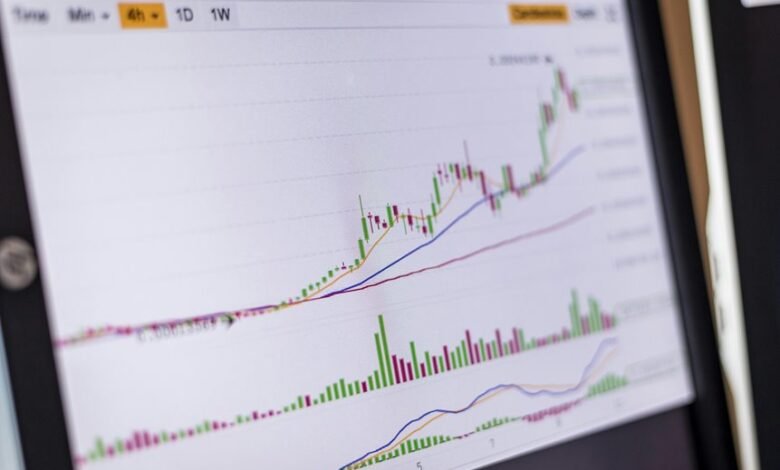
Inflationsprämoe and monitoring logs illuminate near-real-time price pressures shaped by timing, method, and sector heterogeneity. Revisions and sample choices affect interpretation, demanding transparent cross-sector comparisons. Monitoring logs annotate signals with risk flags, triggering alerts for anomalies and guiding disciplined, auditable decision-making. A governance-driven playbook structures data, thresholds, and continuous improvement, translating granular observations into risk-adjusted allocations. The framework raises questions about bias, scope, and actionability that warrant closer examination.
What Inflationsprämoe Reveals About Price Pressures
Inflationsprämoe signals reveal only partial reflections of price pressures, underscoring that measured inflation is shaped by timing, methodology, and sector heterogeneity as much as by actual demand shifts.
The analysis focuses on inflation signals and the data interpretation process, highlighting how revisions and sample choices color conclusions.
Policy implications rely on cautious interpretation, cross-sector comparison, and transparent methodological disclosure.
How Monitoring Logs Detect Real-Time Anomalies
Monitoring logs offer a near real-time view of system activity, enabling the rapid detection of deviations from established baselines.
Algorithms annotate streams, tagging inflation signals and other risk indicators, while thresholds trigger alerts for monitoring anomalies.
Analysts compare patterns across metrics, differentiating noise from meaningful shifts, supporting disciplined responses.
This approach emphasizes objective, data-driven evaluations over speculative interpretations.
Integrating Insights: From Data to Decisions for Investors
Integrating insights involves translating granular data from monitoring logs and inflation signals into actionable investment decisions.
The analysis distills signals into structured options, prioritizing transparency and traceability.
Investors evaluate risk-adjusted returns against documented inflow patterns, with anomaly detection highlighting deviations from baseline trajectories.
Decisions hinge on reproducible methods, enabling disciplined allocations while preserving autonomy and freedom to adapt as new inflation signals emerge.
Practical Playbook: Implementing Monitoring Logs and Inflation Signals
A practical playbook details how to deploy monitoring logs and inflation signals in a disciplined, repeatable manner, aligning data collection with investment objectives.
It emphasizes structured data governance, transparent thresholds, and audit trails.
Analysts translate signals into actionable alerts, calibrating timing and sensitivity.
Results rely on robust validation, independent review, and continuous improvement, ensuring inflation signals and monitoring logs support confident, freedom-oriented decision making.
Conclusion
The analysis suggests that inflationsprämoe provide near-real-time signals of sector-specific price pressures, while monitoring logs furnish anomaly flags that test underlying assumptions. A theory claiming universal, uniform inflation signals across sectors is unlikely; heterogeneity and methodology shape readings. By triangulating revised measures with auditable thresholds, the approach yields disciplined, data-driven allocations. Ultimately, transparent governance and reproducible processes convert granular observations into risk-adjusted decisions, reinforcing investor resilience amid evolving price dynamics.